
Brand Experience Centre: Planning & Implementation
- Showroom
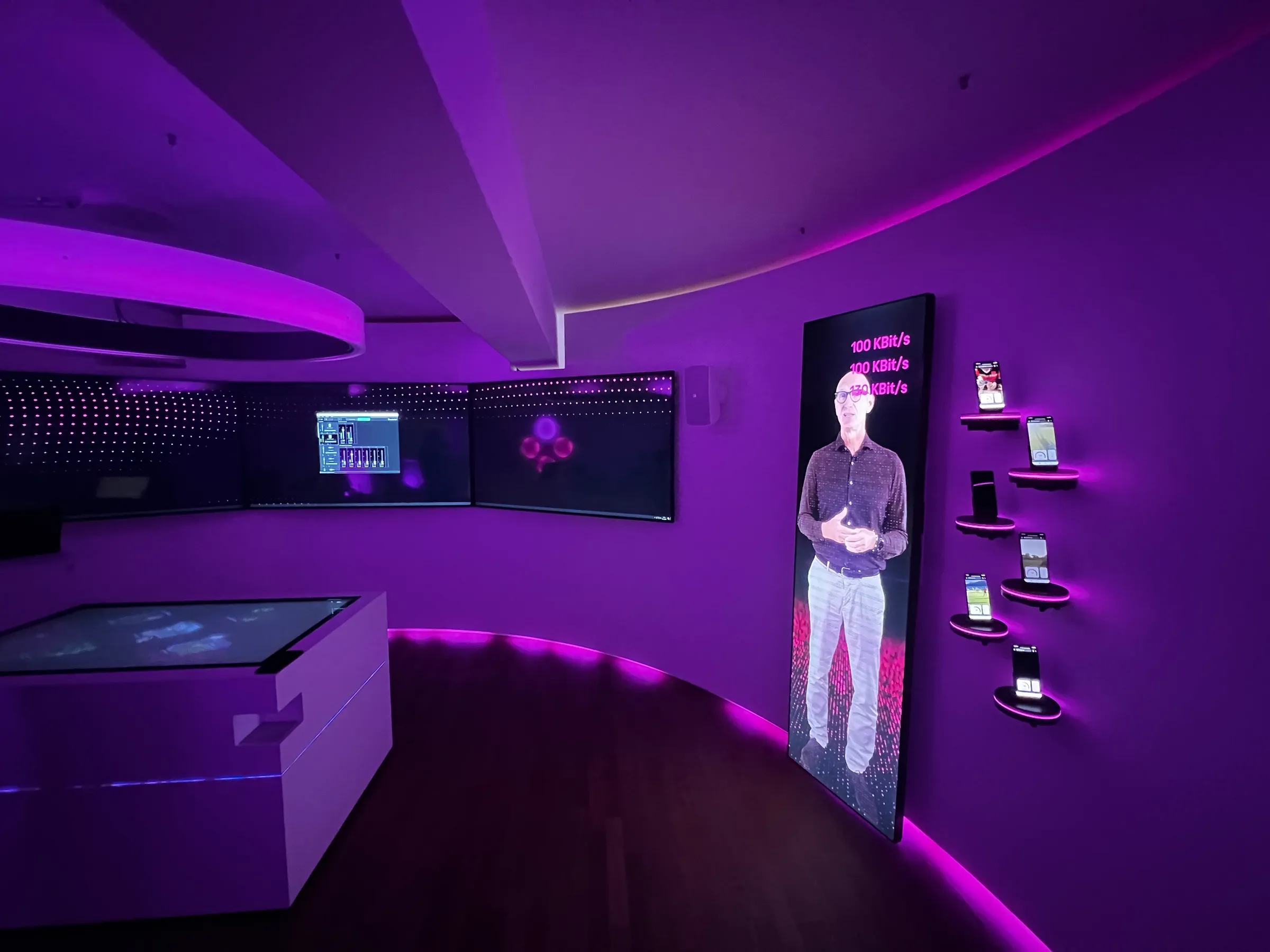
Brand Experience Centre: Brand worlds that customers can actively experience
A Brand Experience Centre brings your brand to life in a physical, digital and interactive way. Rather than bombarding visitors with a linear presentation, we create a brand world that responds to people, makes complex content accessible and sparks conversation.
To achieve this, we combine experience strategy, spatial design, bespoke software, interactive media, hardware and content management into a comprehensive system that brings your brand to life. The result is not a mere showcase of technology. It is a touchpoint that can be used on an ongoing basis for marketing, sales, innovation, communication and recruitment.
What is a Brand Experience Centre?
A Brand Experience Centre is a permanent physical space where people can actively discover a brand. Products, technologies, the company’s history and future themes are not merely displayed, but are brought to life through interaction, staging and storytelling.
A well-designed brand experience offers multiple points of access. This enables sales staff to make targeted presentations, allows customer groups to explore products for themselves, and ensures that international visitors receive content in their own language. Job applicants, in turn, experience the company’s culture and innovative spirit. Employees, for their part, may use the same space for training sessions, workshops or events.
A Brand Experience Centre combines brand strategy, spatial experience design and digital interaction. It translates complex messages into a personalised experience and remains up to date in the long term thanks to a content management system.
Brand Experience Centre, showroom or flagship store?
Format
Main objective
Typical uses
Character
Brand Experience Centre
Bringing the brand, products and future themes to life in a holistic way
Client visits, sales, innovation, events, recruitment
strategic, immersive, long-lasting and multimedia-based
Corporate Showroom
Showcasing products, solutions and expertise
B2B sales, product demonstrations, company visits
presentation- and product-oriented
Flagship store
Showcasing brands and products on the shop floor
Retail, Consultancy, Sales
transactional and consumer-focused
Event or pop-up
Capturing attention within a limited timeframe
Launch, trade fair, festival, campaign
temporary and reach-oriented
The boundaries are blurred. An interactive corporate showroom can serve as a brand experience centre, an innovation space and a sales platform all at once. It is not the name that matters, but the objectives behind the space.
When a Brand Experience Centre makes strategic sense
A Brand Experience Centre is particularly worthwhile if your products require explanation, are large, invisible or not physically available at all. Machines, digital services, infrastructure projects, production processes and research can only be conveyed to a limited extent in a standard meeting room.
We recommend a brand room if at least one of the following applies:
- Your sales team needs a suitable venue for client meetings and workshops.
- Your portfolio is too broad or complex for a linear presentation.
- Products or systems are located at other sites and need to be accessible digitally.
- Innovations, data and processes must be visualised in a way that is easy to understand.
- Your brand should present a consistent image to international guests.
- A new headquarters, foyer, innovation centre or visitor centre is being built.
- The company’s history and future strategy are to be brought together.
- The space is intended to be used by customers, staff, job applicants and for events.
- Content changes regularly and must remain updatable without the need to commission an agency.
This is how a representative space becomes an active business tool. The space facilitates discussions, speeds up understanding and helps teams choose the right story for each group of visitors.
What makes an interactive brand experience successful
An interactive brand experience begins with the question of what visitors should have understood, felt and experienced by the end of the event.
Clear objectives rather than a wish list of technical features
“We want VR” or “We want a hologram” is not yet a concept. First, we define target audiences, reasons for visiting, communication objectives and the desired next steps. This results in a robust use case for each station.
A sales event requires a different level of detail and different procedures to a general open day. A meeting with the board works differently to a self-guided tour. Good systems support multiple modes without becoming complicated.
A narrative structure with a clear underlying theme
People don’t remember a collection of features. They remember a story. That’s why we combine space, media and interaction to create a clear visitor journey: arriving, becoming curious, discovering, exploring further, discussing and taking action.
The dramatic structure may come as a surprise. However, it must always serve the message of the company and the brand. An impressive effect that serves no purpose in terms of content is merely window dressing.
Intuitive interaction
Interaction should lower barriers to engagement, not create new ones. Clear signals, intuitive interfaces and immediate responses to visitors’ input are crucial. The company’s digital content should always adapt to its target audiences, not the other way round.
In our design work, we also follow recognised principles of digital accessibility. TheW3C’s Web Content Accessibility Guidelinesprovide an important basis for this, covering aspects such as contrast, usability, alternative text and clear structures. Moreover, all target groups benefit from these optimisations.
Appropriate depth for different target audiences
A Brand Experience Centre must be both fast-paced and in-depth. A manager wants to maintain a strategic overview. A specialist wants to learn about the technical details. A job applicant, on the other hand, is interested in the corporate culture and their career prospects.
Non-linear content resolves this conflict of objectives. Users can freely choose topics, compare options, open 3D models or change the language. Presenters can respond spontaneously to questions and are not tied to a strict sequence of PDFs or PowerPoint slides. This flexibility in presenting allows them to tailor their approach to each individual and adapt to the flow of the conversation – and visitors notice the difference.
Taking day-to-day operations into account right from the start
The opening day does not mark the end of the project. It marks the start of operations. That is why we factor in content management, rights, approvals, updates, maintenance, support and technical monitoring right from the start.
A web-based CMS enables your team – or even external agencies – to update text, images, videos, projects and languages themselves. This ensures your brand identity remains relevant without you having to rely on external parties for every change.
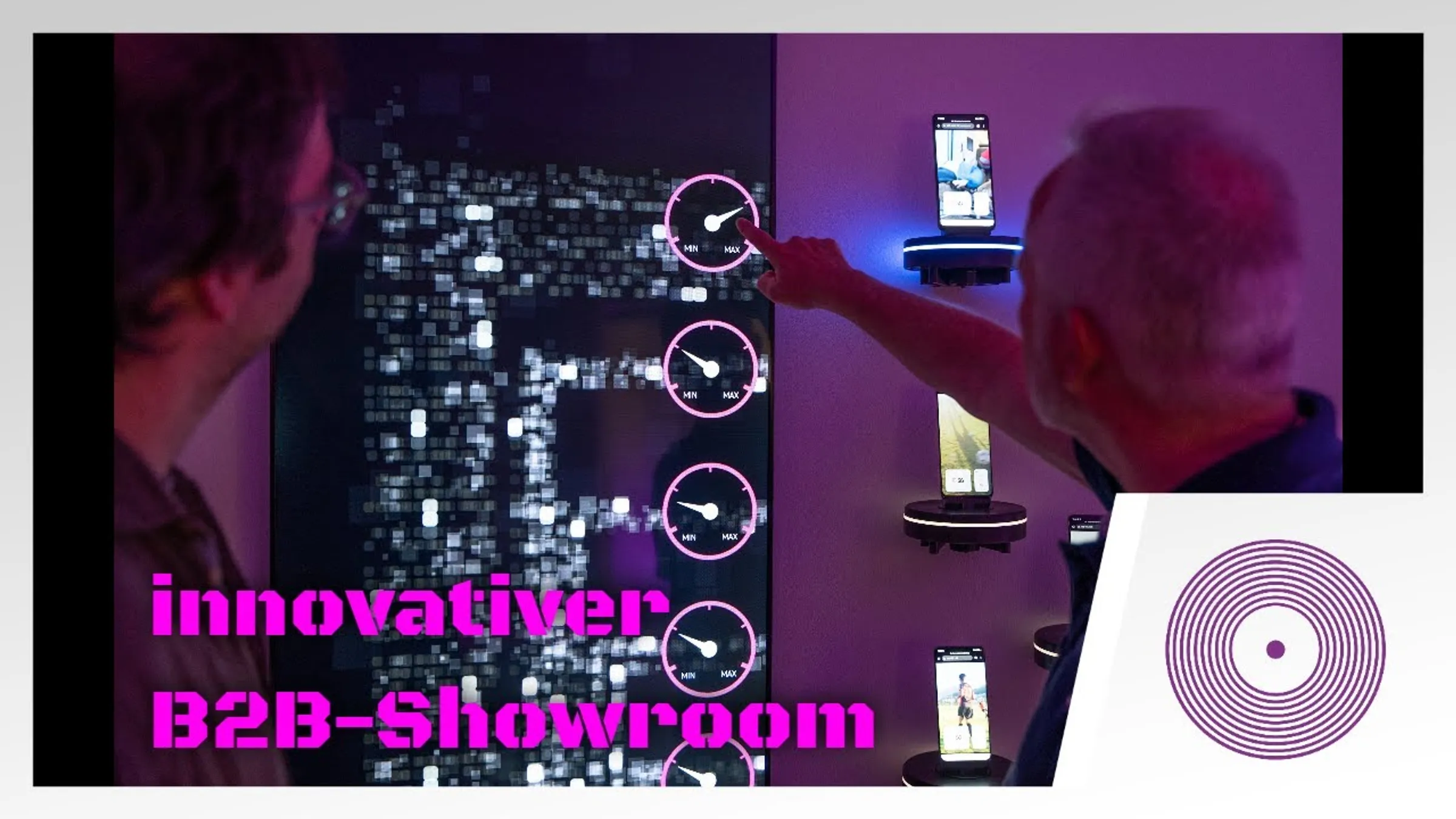
Dieser Inhalt wird von einem Drittanbieter gehostet. Durch das Anzeigen des externen Inhalts akzeptieren Sie die Nutzungsbedingungen von youtube.com.
Brand Experience Agency: What we offer as a full-service partner
As a brand experience agency, Garamantis combines creative concept development with software development and technical implementation. You do not have to coordinate interior designers, designers, developers, media technology specialists and specialist builders yourself to bring everything together into a functioning system. This means there are no inefficiencies whatsoever during the course of the project.
Our full-service process takes you from the initial idea right through to day-to-day operations.
1. Concept & Experience Strategy
We analyse target audiences, content, usage scenarios and communication objectives. Workshops provide a common framework for marketing, sales, management, IT, architecture and other stakeholders.
Based on the results, we develop a guiding concept, visitor experiences, programme structure, scope of functions, and a realistic timeframe and budget. 3D renderings provide an early, tangible impression of the final solution.
2. Interactive Space Design
We translate strategies and content into the physical space. In doing so, we plan sightlines, circulation, media surfaces, interaction zones, lighting, audio and furnishings to create a cohesive experience.
The space must be suitable for both guided tours and independent exploration. Acoustics, fire safety, access for maintenance and integration into the existing architecture are also taken into account.
3. Experience Logic & Software
We develop interaction principles, real-time software, interfaces, content management and centralised control systems. The software is tailored to your corporate design and content.
Depending on the size of the room, we connect several interactive stations via a network. A piece of content starts on the multi-touch table, appears on the large media wall and simultaneously alters the lighting and sound. Sensors can enable the room to respond to visitors.
4. Hardware & System Integration
We plan, test and integrate displays, projections, sensor technology, lighting, audio, exhibits and bespoke structures. When selecting the technology, we take into account not only the maximum technical specifications, but also the intended use, the environment, maintainability and the desired effect. In particular, we assess the cost-effectiveness of the hardware, as every euro spent should ultimately deliver the maximum impact for visitors.
Data protection is also part of system planning. As soon as cameras, sensors or usage data are used, consideration must be given to the purpose, data minimisation and transparent information. The General Data Protection Regulation on EUR-Lex provides the binding European framework for this.
5. Implementation & day-to-day operations
We integrate, test, install and optimise the system on site. We then train your team and provide ongoing support and maintenance throughout its operation.
You won’t receive a loose collection of individual trades, but rather a coordinated system. It is precisely this that reduces interface risks and ensures that the experience continues to function reliably even after many years.
Technologies for a high-impact Brand Experience Centre
Technology is the right choice when it performs a task better than a static medium. Our interactive technologies can be combined in a modular way.
Technology
Particularly suitable for
Added value
Multitouch table
Portfolios, maps, timelines, 3D models, groups
collaborative, flexible and accessible from multiple sources
Screen wall or LED wall
Brand films, large data visualisations, group presentations
significant long-range impact and a shared focus
Interactive projection
large-scale storytelling, architecture, infographics
combines analogue surfaces with dynamic content
Sensors and object recognition
Products, material samples, automatic responses
turns real-life exhibits into an interface
VR and AR
complex systems, digital twins, configuration, product exhibition
reveals what is invisible, future or spatially distant
Light and spatial audio
Atmosphere, orientation, dramatic transitions
appeals to several senses and gives structure to the journey
Rotating or transparent displays
Changes in perspective, overlays, spatial views, 360-degree content
creates surprising, brand-specific interaction
Web-based CMS
Ongoing maintenance, languages, projects and news
keeps content up to date and reduces follow-on costs
Central control
Presentation modes, Start/Stop, Scenes and Monitoring
simplifies day-to-day operations
Immersion does not happen automatically simply because more technology is used. The QUALINET white paper on the Immersive Media Experience shows how much the perceived sense of presence and the quality of the experience depend on a number of factors. In practice, this means that content, space, interaction and technical planning must all work together.
From Brand Space to Business Tool – 5 typical use cases
A Brand Experience Centre can do more than just create a good first impression. Garamantis designs the experience so that it is integrated into the company’s existing processes.
1. Sales and lead qualification
Sales teams put together content tailored to the announced guest, compare solutions and explore technical questions in depth directly. Following the visit, selected content or findings can be incorporated digitally into the follow-up process.
2. Product and Innovation Communication
Digital twins, 3D models, data visualisations and interactive demonstrators bring complex services to life. Products that are not yet available can be presented and discussed at an early stage.
3. Client visits and executive briefings
A range of visit formats provides a professional setting for specialist groups, management, partners or international delegations. The language, level of detail and key topics can be tailored to individual requirements.
4. Training and internal communication
The room can be used for onboarding, product training, strategy sessions and town hall meetings. This increases utilisation and makes the investment more cost-effective.
5. Employer branding and recruitment
Job applicants get to experience technologies, projects and corporate culture, rather than generic claims. A credible brand space shows what teams are working on and what innovation actually looks like within the company.
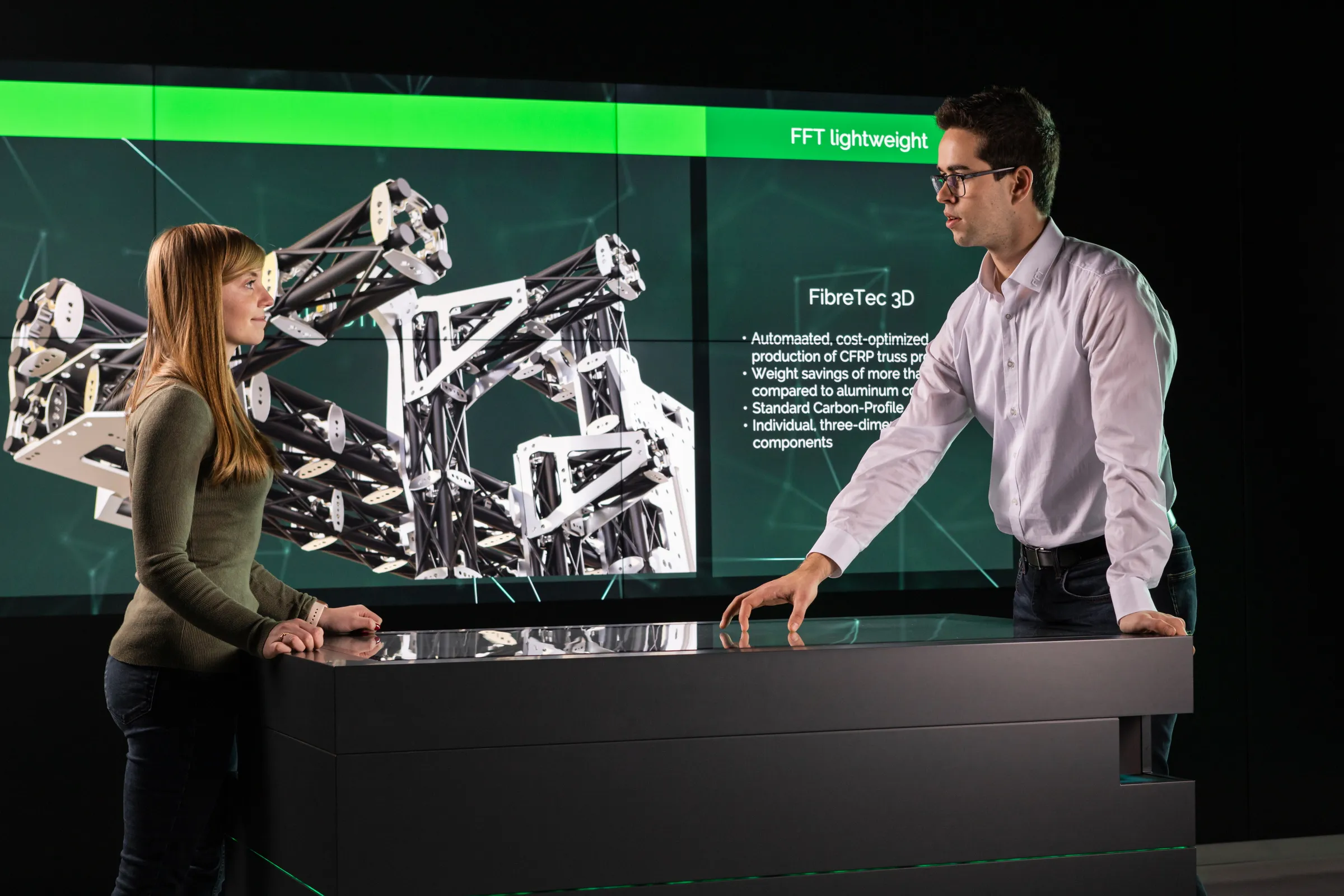
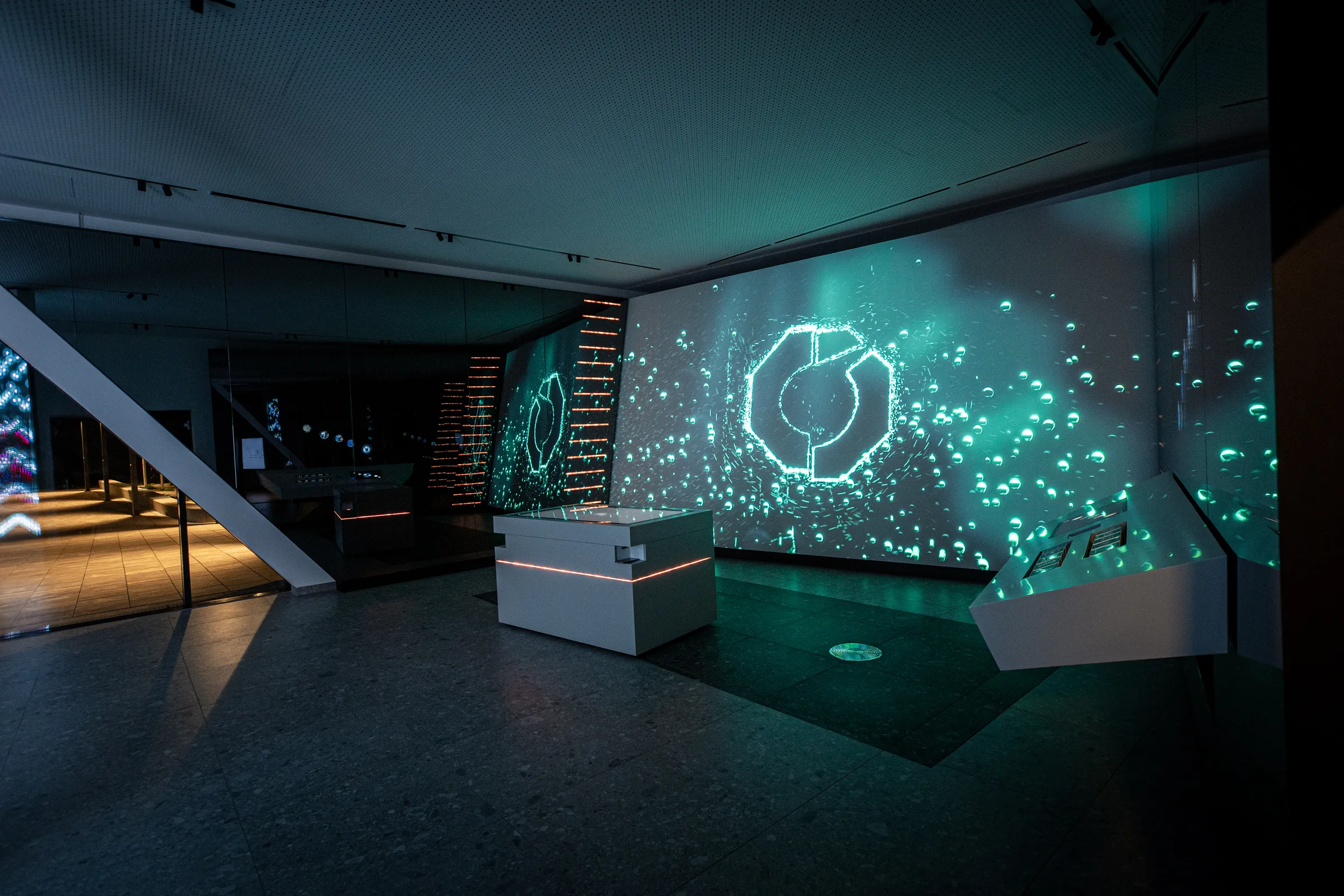
For theWack Group’s corporate showroom,we have integrated bespoke stations and a newly developed three-layer display into a seamless customer journey.
Plan the budget, timetable and operations realistically
The costs depend on the size of the room, the interior fit-out, the volume of content, the complexity of the software, media production and, in particular, the planned hardware. A reliable price is therefore based on a concept, rather than a flat rate per square metre.
As a guide, an interactive core solution comprising a multi-touch table, a screen wall, bespoke software, a CMS, lighting and audio can cost in the region of 150,000 euros (net). Construction work, content production, complex specialist technology and other trades will be added to this, depending on the project.
Smaller brand spaces can often be completed in around four to six months. Large-scale projects involving architecture, numerous stakeholders, bespoke developments and content production naturally take longer. The Wack showroom, for example, was completed within a twelve-month project timeframe.
To ensure a robust budget, we consider not just the launch, but the entire life cycle:
- Concept development, planning and project management
- Interior and Media Design
- Software and CMS
- Hardware and AV equipment
- Content creation and media production
- Installation, testing and acceptance
- Maintenance, support and future upgrades
Our showroom white paper brings together 60 pages of expert knowledge, practical examples, checklists and guidance on costs and scheduling.
Making success measurable
KPIs for measuring success should be established at the planning stage. Possible metrics include:
- Number and type of visits
- qualified leads and agreed follow-up appointments
- Use of individual topics and stations
- Duration of stay
- Feedback from customers and the sales team
- Number of events and internal uses
- Supported sales opportunities or accelerated decision-making processes
Not every project requires comprehensive tracking. In many B2B situations, qualitative feedback, sales data and specific next steps are more meaningful than mere interaction figures.
Why Garamanti’s Brand Experience Centre was developed holistically
We have been developing interactive exhibitions, corporate spaces and showrooms since 2014. Within our project teams, creative concept development, design, prototyping, engineering and software development work closely together.
This connection is crucial. A great space needs a good story. A good story needs intuitive interaction. And both require the right technology, which works reliably in day-to-day use.
Our experience is publicly documented:
- long-standing partnership with Ars Electronica
- German Innovation Award 2022 for the ‘Procurement Future’ showroom
- TITAN Business Award Gold 2023 for the FFT showroom in the ‘Best Brand Experience – B2B’ category
- Ranked amongst the top 50 German IT companies in 2025
- Projects and client references including ESA, Telekom, Daikin, FFT and Schneider Electric, amongst others
- Our own showroom in Berlin for consultations and technology demonstrations
You can find further insights in our completed projects, as well as in our references and client testimonials.
FAQs about the Brand Experience Centre
What is Brand Experience?
Brand Experience refers to the overall experience that people associate with a brand. In showrooms or brand spaces, it is created through the interplay of interior design, storytelling, media, interaction, and product presentation.
What is a Brand Experience Centre?
A Brand Experience Centre is a permanent, physical brand space where strategy, storytelling, spatial design and digital interaction are brought together. Visitors can actively discover products, services, the brand’s history and its future vision, rather than simply viewing a linear presentation.
What is the difference between a brand experience centre and a showroom?
A showroom typically focuses on products and sales presentations. A brand experience centre, on the other hand, presents the brand in a more holistic way and can also incorporate innovation, culture, history, recruitment, events and internal communication. In practice, the two formats can overlap.
What sort of work does a brand experience agency carry out?
A brand experience agency develops strategy, a central concept, spatial design, interactions and content logic. A full-service approach also includes software development, hardware planning, system integration, installation, training, maintenance and ongoing support.
How long does it take to set up a brand experience centre?
Smaller projects can usually be completed within four to six months. Large-scale centres, however, involving structural work, numerous stakeholders, bespoke solutions and extensive content production, require more time. A robust timetable is drawn up as part of the concept development phase.
How much does a brand experience centre cost?
The costs depend on various factors such as the venue, software, media, hardware, content and bespoke construction. A core interactive solution comprising a multi-touch table, a screen wall, bespoke software, a content management system (CMS) and lighting and audio technology can start at around 150,000 euros as a guide. Expansion, content production and complex bespoke technology are added on top, depending on the project.
Which technologies are suitable for an interactive brand experience?
Suitable options include, for example, multi-touch tables, screen walls, interactive projections, sensor technology, object and gesture recognition, VR and AR, as well as lighting and spatial audio. Transparent or rotatable displays are also possible. The choice always depends on the target audience, content, space and usage scenario.
Can companies update the content themselves at a later date?
Yes, with a web-based content management system, authorised teams can manage text, images, videos, projects, languages and other content themselves. Categories, access rights and approval processes are tailored to internal procedures.
How can success be measured?
Useful KPIs include qualified leads, follow-up appointments, time spent on the site, engagement with specific topics, feedback, internal usage and qualitative feedback. The measurement criteria should be defined before the project begins and implemented in accordance with data protection regulations.
How are accessibility and data protection taken into account?
Accessibility is supported by clearly visible controls, sufficient contrast, alternative access methods, plain language and appropriate operating heights. With regard to data protection, we assess at an early stage whether sensors, cameras, personalisation or tracking processes process personal data, and what technical and organisational measures are required.